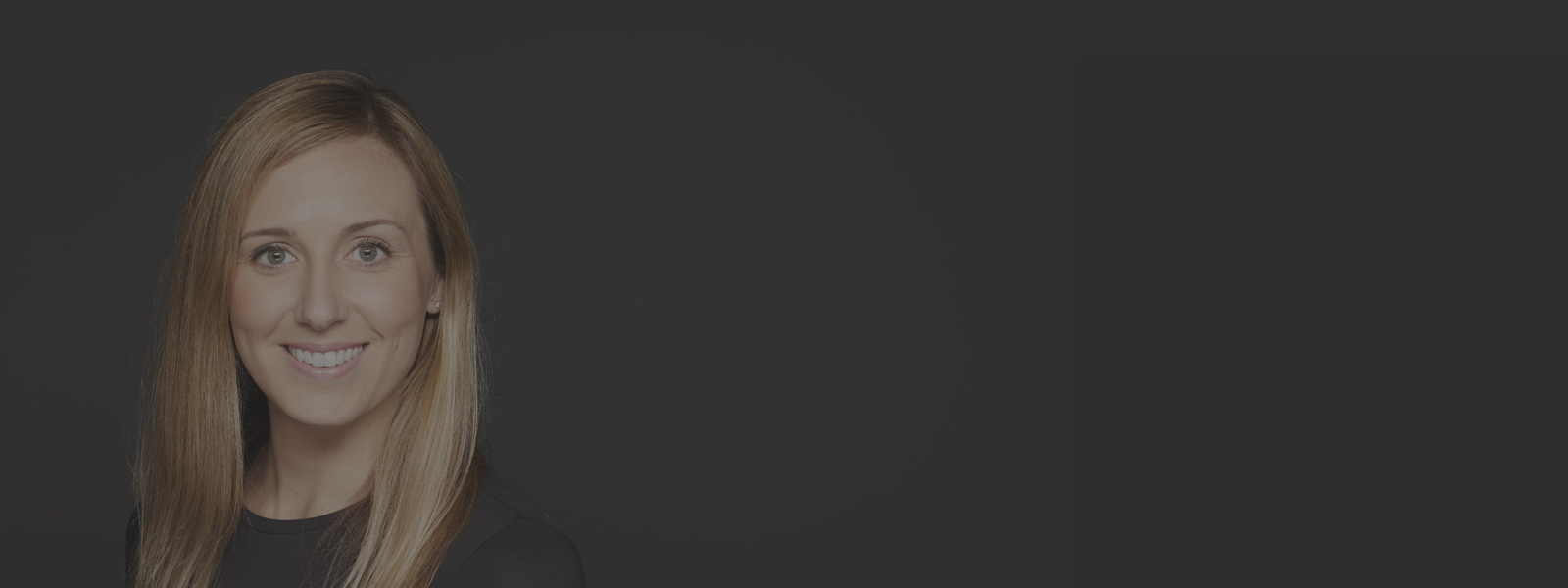
When asked to think about what “The Art of Collaboration” means to me as the Head of School at Marymount, the first image that came to mind was that of a bridge. I have always loved the metaphor of the bridge, as we often hear societal idioms such as, “We’ll cross that bridge when we get there,” or “Let that be water under the bridge.” Perhaps my favorite bridge idiom however, is one told to me by Sister Monika Hellwig at Georgetown University many years ago: “If you’re going to be a bridge builder, prepare yourself to walk across to both sides.”
Building a bridge to tomorrow
The idea of bridge building is a beautiful example of collaboration, or of the more common terms we often hear as essential literacies of the 21st century: partnership, diplomacy, cooperation. Yet bridge building has its own nuanced twist on these values; it does not just require ‘meeting in the middle,’ as partnership and cooperation do, it goes beyond, demanding that one go across, being the connector between sometimes opposing sides.
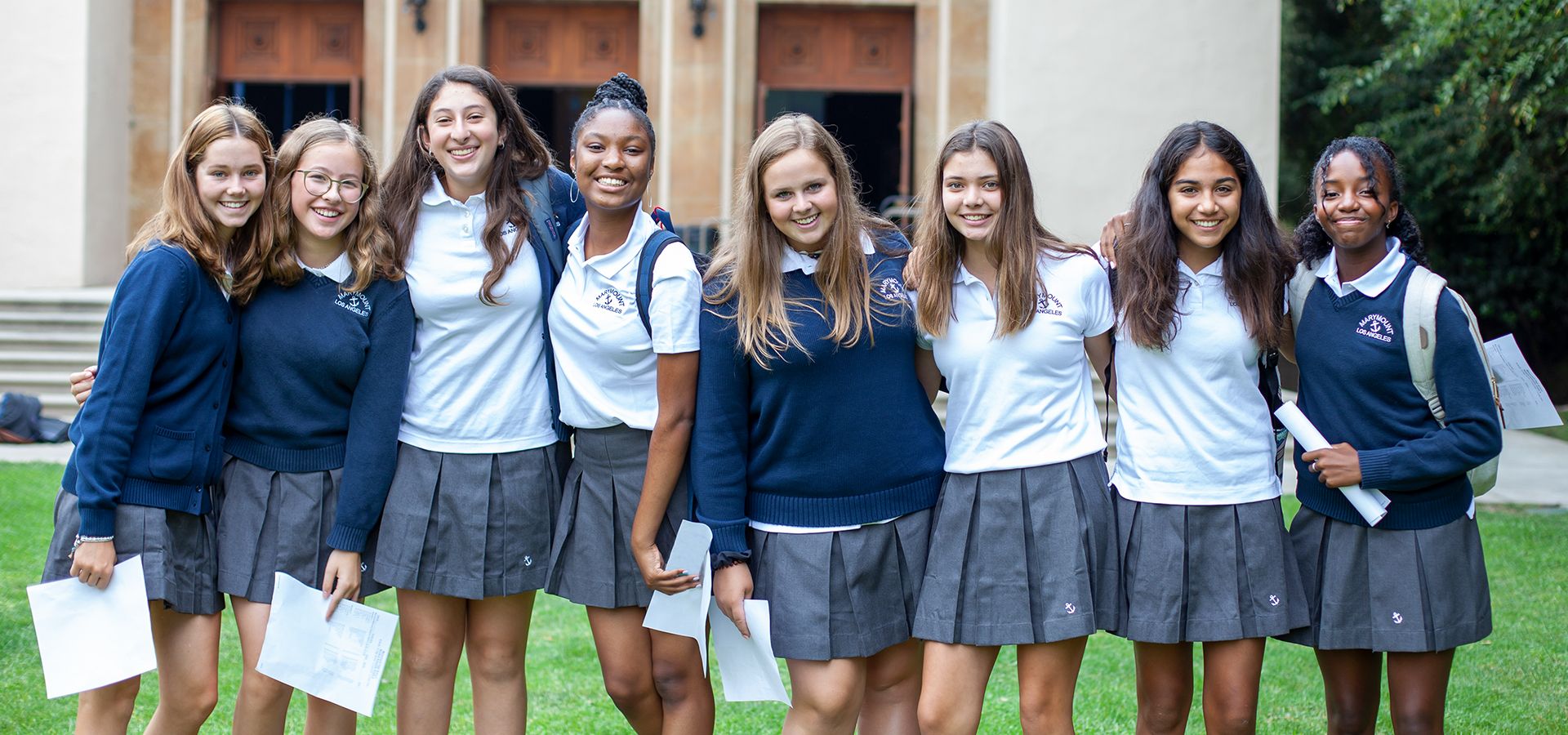
As the leader of 398 gifted, bright and driven young women, I feel that the ability to build bridges – whether across backgrounds, age groups, ethnicities, or religions – is an essential tool not only within our Marymount community, but also for each student’s future. As we prepare our students to be peacemakers, ambassadors, and arbiters for good, in order to empower them to be effective bridge builders, we must simultaneously show them how to seek integration of thought, break down silos in communication, and reduce sterile habits of thinking. As Marymount Trustee Sr. Patricia Connor, RSHM, reminds us, we subscribe to a culture of “Yes, and,” not a “Yes, but,” way of thinking.
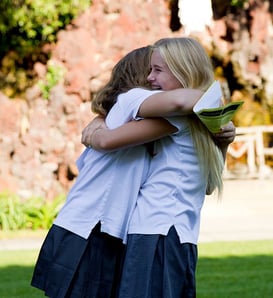
So what exactly does upholding the value of bridge-building and being a “Yes, and” culture bring to our campus? It empowers us to take on a profound cross-disciplinary learning model – breaking down walls between departments, teaching our girls to easily cut across disciplines, and training our minds to think nimbly across different perspectives (see article on page 9, ‘Collaboration From the Inside Out’). It also infiltrates the social norms of our student culture, teaching them to prize collective victories over individual successes (see student perspectives article on page 20, ‘How Far Can You Go When You Collaborate Instead of Compete?’).
Blending our dual identities
While all strong examples of bridge-building, perhaps the most ever-present pulse of Marymount’s collaborative spirit can be found within the partnership integral to our identity: Marymount is an Independent and a Catholic school.
Being an Independent and a Catholic school means that we receive accreditation from three formidable accrediting agencies [The Western Association of Schools and Colleges (WASC), the California Association of Independent Schools (CAIS), and the Western Catholic Educational Association (WCEA)]. These outside governing bodies ensure that we meet the highest standards of academic excellence and spiritual development, while also ensuring that our mission delivers all that we promote. Not all schools that are Catholic are Independent, and conversely, not all schools that are Independent are religious. In fact, only about a third of schools within the National Association of Independent Schools (NAIS) are also religious (this includes schools from a multitude of religious traditions).
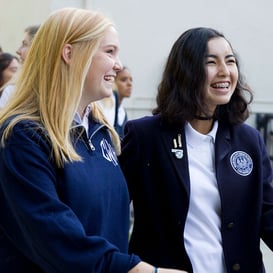
While Marymount maintains a clear and strong Catholic heritage and identity, the school is independently funded, not tied directly to any Parish, and receives no monetary support from the Diocese. Like all independent schools, Marymount’s annual operating budget and financial aid program are reliant upon tuition, as well as support from families, alumnae and foundations. Our student body comes to us from over 25 Catholic elementary schools, as well as over 50 public, charter and Independent schools combined. Our student body identifies as 60% Catholic, with the other 40% representing a rich mix of 17 other religious traditions. The very nature of our student body has been, and is, diversity – their backgrounds, interests, neighborhoods, religious traditions – all blend beautifully in our hallways each day, and will for decades to come.
Our founding Sisters, the Religious of the Sacred Heart of Mary (RSHM), have always seen the value of the collaborative nature of our identity. Sr. Colette McManus, RSHM, who headed Marymount from 1973 – 1991, served on the CAIS board for two terms, ensuring that the Marymount voice was represented not only within the Catholic School community, but also within the broader California private school consortium. I have been honored to also serve in her footsteps, having just finished my own six-year term with this distinguished group of Independent school leaders.
The best of both worlds
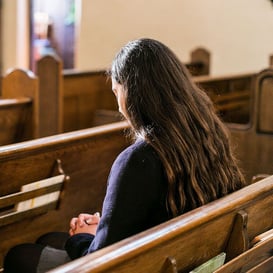
Our identity as both Independent and Catholic means that we believe in, and cherish a ‘best of both worlds’ mentality, and are extremely well-versed in the skills required to be effective bridge builders. As an Independent school, we uphold the highest standards of a college preparatory curriculum, bringing outstanding faculty, a well-resourced academic program, individualized attention and cutting-edge technology to our students. As a Catholic school, we build on the centuries-long, rich tradition of academic excellence, adding a distinctive layer of spiritual development, a broad four-year study of Theology, and a strong commitment to serving underrepresented populations.
As we look at the current bifurcated state of our world, torn apart by crippling issues – violence, politics, poverty, racism – I cannot think of a time our society has been more in need of our girls, the future leaders and peacemakers of the world. It will take these critical skills of bridge-building and the “yes, and” mentality for them to effectively achieve what Pope Francis calls us to in this year of mercy: to embrace one another, to subscribe to a tolerant mentality, and to bring authentic compassion to all that we do. It is through this that our students, and we as a community, will be able to find a deeper level of understanding on both sides of the bridge, no matter which issue we face, or on which side we stand.
Editor’s note: A version of this article was originally published in the Spring 2016 issue of “M,” The Marymount Magazine.